
What Is Civic Engagement? A Guide to Getting Involved

What Is Civic Engagement? A Practical Guide to Getting Involved in Your Community
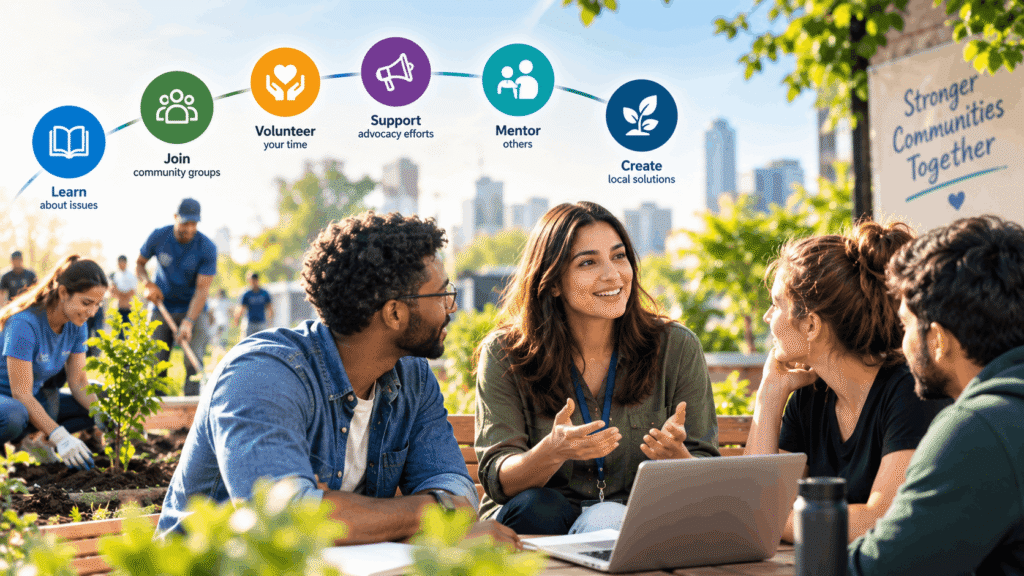
Civic engagement is about taking part in the communities and issues that matter to you. It can involve learning about local issues, volunteering with an organization, participating in community discussions, supporting an advocacy effort, mentoring others, or helping create solutions to problems that affect your community.
You do not need to be a political expert, community leader, or experienced organizer to participate. Civic engagement can begin with something as simple as becoming better informed about an issue you care about and finding a meaningful way to contribute.
Today, people have more ways than ever to learn, connect, and participate. The challenge is often knowing where to begin.
What Is Civic Engagement?
Civic engagement refers to the ways individuals and groups participate in the social, community, and public issues that affect their lives and the places where they live.
It can take many forms, including:
- Learning about community issues
- Attending community meetings
- Volunteering
- Supporting nonprofit organizations
- Participating in local initiatives
- Joining community groups
- Sharing knowledge and resources
- Mentoring or supporting other community members
- Participating in advocacy activities
- Helping organize community projects
Civic engagement is therefore broader than voting or participating in elections. Those activities can be part of civic participation, but meaningful community involvement can happen throughout the year.
Why Does Civic Engagement Matter?
Communities depend on people who are willing to contribute their time, knowledge, skills, and perspectives.
When people understand the issues affecting their communities, they are better positioned to identify opportunities to participate. When they connect with organizations and other community members, they can discover ways to turn that knowledge into action.
Civic engagement can also help people:
Build a deeper understanding of community issues
Many social and community challenges are complex. Learning from reliable resources, experts, community organizations, and people with direct experience can provide greater context.
Connect with organizations and people
Organizations working in communities often need volunteers, supporters, contributors, researchers, mentors, and advocates. Connecting with these groups can help individuals find opportunities that match their interests and skills.
Develop practical experience
Civic participation can provide opportunities to develop communication, leadership, collaboration, research, organizing, and project-management skills.
Contribute to positive community outcomes
Small actions can become part of larger efforts. Volunteering a few hours, sharing useful information, helping at an event, or supporting a community initiative can contribute to broader work.
What Are the Different Types of Civic Engagement?
There is no single way to participate. Different people contribute in different ways depending on their interests, experience, availability, and communities.
1. Learning and Education
One of the most accessible forms of civic engagement is learning.
You might research an issue, take a course, read educational resources, attend a workshop, or listen to people with experience in a particular area.
Learning can help you move beyond surface-level awareness and develop a stronger understanding of the causes, stakeholders, and potential solutions associated with an issue.
2. Community Volunteering
Volunteering is another practical way to become involved.
Community organizations may need help with events, outreach, administrative work, fundraising, communications, mentoring, research, or direct services.
Finding an opportunity that matches your interests and availability can make volunteering more sustainable over time.
3. Connecting With Organizations
Many people want to contribute but do not know which organizations are working on issues they care about.
Building connections with nonprofits, community groups, educational organizations, and other civic organizations can make it easier to discover relevant opportunities.
4. Advocacy and Public Participation
Civic engagement can also involve advocacy and participation in public discussions.
Depending on the issue and context, this might include attending public meetings, communicating with community representatives, participating in organized campaigns, or helping raise awareness about an issue.
Effective participation starts with understanding the issue and the different perspectives involved.
5. Community Projects
Some civic engagement takes the form of direct projects.
Examples include community cleanups, educational programs, neighborhood initiatives, mentoring programs, food-support projects, or other locally organized efforts.
These activities provide a direct connection between participation and community needs.
How Can You Get Involved in Your Community?
If you are interested in becoming more engaged but do not know where to start, use a simple process.
Step 1: Identify an Issue You Care About
Start with your interests.
Think about the problems, causes, or community topics that consistently capture your attention.
You might care about education, environmental issues, economic opportunity, public health, community development, youth programs, housing, technology access, or another area.
You do not need to identify every issue you care about. Start with one.
Step 2: Learn Before You Act
Once you identify an issue, spend time understanding it.
Look for educational resources, research, community organizations, experts, and people directly affected by the issue.
Ask:
- What is the problem?
- Who is affected?
- What organizations are already working on it?
- What approaches have been tried?
- What resources are available?
- Where are additional contributions needed?
This step can help you find opportunities that are actually relevant.
Step 3: Find Organizations Working on the Issue
Search for organizations and community groups connected to your area of interest.
Look at the type of work they do and the opportunities they offer.
Some organizations may need volunteers, while others may offer educational programs, community events, advocacy opportunities, internships, or other ways to participate.
Step 4: Choose an Action That Fits You
Not every opportunity will be right for every person.
Consider your:
- Available time
- Skills
- Interests
- Location
- Preferred type of activity
- Desired level of involvement
Someone who has only one hour available each month can still contribute. Another person may want to take on a larger volunteer role.
The important part is finding an appropriate starting point.
Step 5: Stay Involved
Civic engagement is often more meaningful when it becomes an ongoing practice rather than a one-time activity.
After participating, reflect on what you learned and what you would like to explore next.
You might discover a new organization, develop a new skill, meet people working on the same issue, or find another opportunity to contribute.
How Technology Can Make Civic Engagement Easier
Finding opportunities to participate can sometimes be difficult because information is spread across different websites, organizations, events, courses, and community groups.
Digital platforms can help bring these resources together.
A connected civic engagement ecosystem can help people move from learning about an issue to discovering organizations, finding opportunities, connecting with others, and documenting their participation.
That is the approach behind Civic Dispatch, which connects civic learning, organizations, opportunities, communities, and participation in one ecosystem. Dispatch Network describes the experience through five stages: Explore, Learn, Connect, Engage, and Make an Impact.
Civic Engagement Does Not Have to Be Complicated
A common misconception is that civic participation requires a major commitment.
It does not.
You can start by:
- Learning about an issue
- Taking a course
- Attending a community event
- Joining an organization
- Volunteering
- Connecting with a mentor
- Sharing useful resources
- Participating in a community project
- Finding an opportunity that matches your skills
The key is to move from awareness toward meaningful participation.

Hi, this is a comment.
To get started with moderating, editing, and deleting comments, please visit the Comments screen in the dashboard.
Commenter avatars come from Gravatar.